Register interest
Receive updates or offer voluntary help. This has no legal effect and requires no identity-document data.
Learn how to engage
Referendum concerning Law No. 21/2024
Clear information about the referendum, its background, legal framework and context.
A referendum is one of the constitutional ways in which the people may exercise sovereignty directly, rather than only through elected representatives.
Constitution of Albania · Article 2
“Sovereignty in the Republic of Albania belongs to the people. The people exercise sovereignty through their representatives or directly.”
Article 150 of the Constitution provides a direct-democracy route: 50,000 citizens with the right to vote may seek a referendum to repeal a law. This initiative seeks to use that route to place the continued force of Law No. 21/2024 before eligible voters, subject to the full legal process.
A referendum is a formal public vote in which eligible voters decide a specific legal question directly. Here, the proposed question is whether Law No. 21/2024 should be repealed.
Receive updates or offer voluntary help. This has no legal effect and requires no identity-document data.
Learn how to engageAn eligible voter signs once, in person, using the official CEC form after signature collection has been authorised.
If the legal process reaches a national vote, eligible voters answer the approved ballot question.
The initiators organise and submit the formal request to the Central Election Commission (CEC) and carry the legal responsibilities assigned to them. ADCN supports the work but does not replace the initiator group.
The CEC administers the applicable electoral procedure, reviews formal submissions and issues the decisions and authorised materials required by law.
The Constitutional Court carries out the review required by the Constitution, while the President acts within the constitutional procedure if the legal requirements are satisfied.
Eligible voters may support an authorised signature request and, if the process reaches a national vote, decide the approved referendum question.
The citizen-led initiative asks the Central Election Commission (CEC) to begin the process for a national referendum on repealing Law No. 21/2024, which amended Albania’s protected-areas framework.
The proposal is not to abolish Law No. 81/2017 “On Protected Areas” in its entirety. Its intended legal object is the 2024 amending law.
Official supporting signatureCompleted in person on the CEC-authorised form after signature collection is approved.
This illustrative English version shows the question that may accompany the signature request. It is not a ballot. The official Albanian wording and authorised form will be confirmed by the Central Election Commission (CEC/KQZ).
A statement, announcement or draft bill does not change the law. Any enacted legislation must be compared with Law No. 21/2024, including commencement and transitional provisions. If the amendments are fully removed, the referendum may lose its legal object; if partly changed, the initiators will obtain updated legal advice.
See current legislative developments in TrackParliament adopted Law No. 81/2017, the main framework for protected areas.
SourceThe changes included “tourism of excellence” provisions and a replacement Article 33.
SourceThirty-seven MPs challenged the law. AOS and EcoAlbania participated as interested parties.
What is constitutional review?The Court rejected the application. On two legal issues, the eight judges divided 4–4; three judges issued a joint dissent.
SourceProtected-area governance became the focus of sustained civic engagement and institutional attention.
Those initiatives concern Law No. 20/2025 and Law No. 55/2015—not the present Law No. 21/2024 proposal.
The resolution called for repeal of the 2024 amendments and a moratorium on incompatible interventions.
The CEC approved signature rules. European and Albanian officials also addressed expected legislative changes.
The proposal sits at the intersection of direct democracy, protected-area law, environmental decision-making, and Albania’s domestic, European and international obligations.
No single document answers every question. Use the tabs below to move between the legal framework, the 2024 amendments, the Constitutional Court judgment and the wider Vjosa–Narta and European context.
The Court rejected the application. The judgment also includes a joint dissent by three judges; both are summarised below.
The framework law’s concrete effects were treated as depending on later area- and project-specific acts. The majority also found the parliamentary consultation sufficient.
The dissent considered that important legal effects flowed directly from the amendments and raised constitutional, international-law and consultation concerns.
Twelve citizens bear the initiative’s legal responsibility and moral commitment. Open each card to read the full profile.
 Besjana Guri Director of the LUMI association
 Besjana Guri is an environmental activist and one of Albania’s most internationally recognised advocates for river protection. With a background in the social sciences and community-based work, she was part of the founding team of EcoAlbania and one of the leading figures of the Save the Blue Heart of Europe campaign in Albania. The campaign brought together communities, researchers, civil-society organisations and international supporters in opposition to planned hydropower development on the Vjosa. Its most significant achievement came in March 2023, when the Vjosa and its principal tributaries were declared the Vjosa Wild River National Park, the first of its kind in Europe.
For this work, Besjana Guri received the 2025 Goldman Environmental Prize, one of the world’s most prestigious awards for grassroots environmental activism, often described as the “Green Nobel.” In 2025, she founded LUMI — Movement for Water, Environment and Integration, an organisation placing communities, women and young people at the centre of environmental protection. EuroNatur has described her as one of the key figures behind the success of the campaign for the Vjosa.
As one of the referendum initiators, she brings extensive experience in civic organising, public communication and the legal protection of ecosystems.
Open source profile Blendi Salaj Journalist and communications expert
 Blendi Salaj is a journalist, television and radio host, producer and communications professional with more than two decades of experience in Albania and the United States. He graduated Cum Laude in Communication from Worcester State University, Massachusetts, and has built a career spanning television, radio, digital media, media education and public communication. Since 2022, he has served as Editor-in-Chief and host of Wake Up on Top Channel. Previously, he hosted Our Day on A2 CNN and was the creator and host of The Breakfast Club on Club FM.
Beyond broadcasting, Blendi has led the Active Media Center, lectured on journalism ethics, media literacy and public speaking, and trained young people in activism. He is also the co-founder and former Editor-in-Chief of the socio-political platform Peshku Pa Ujë. In 2025, he received Business Magazine’s “Influencer of the Year” award, reflecting his continued influence on public debate and media communication in Albania.
Open source profile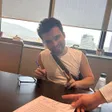 Ersid Domnori Dentist
 Ersid Domnori studied dental sciences and works as a dentist, according to information provided directly in the initiator group’s materials. Publicly available information connects his name with the Faculty of Dental Sciences at Aldent University in Tirana, while the institution’s ResearchGate membership page lists him within the Faculty of Dentistry, with an academic interest in dental caries.
Domnori has also appeared as a co-author in international research involving dental students. This includes two 2021 studies published in Vaccines examining attitudes towards COVID-19 vaccination and factors associated with vaccine hesitancy, as well as a multinational 2025 study published in Frontiers in Oral Health examining the professional aspirations of dental students. These publications reflect experience in large-scale research collaborations and in analysing behaviour, knowledge and decision-making among students in the medical sciences.
Open source profile Gentiana Kapllani Lawyer
 Gentiana Kapllani is a lawyer with professional experience across the legal-technology sector, international corporations, academia, education and community-empowerment projects, as well as in the training and mentoring of young people. She is one of the initiators of the referendum seeking the repeal of Law No. 21/2024. Her work is guided by a strong belief in the value of collective civic engagement and in the importance of citizens using the legal mechanisms available to them to protect Albania’s natural heritage.
Alongside her professional work and her role as a referendum initiator, Gentiana contributes as a legal adviser to the referendum process, with particular involvement in matters concerning personal-data protection.
She has consistently combined professional inquiry with civic responsibility and is the author or co-author of research including Gender-Based Violence: The Albanian and International Approach, From de jure to de facto: An Overview of the Expansion of the Rights of Girls and Women in Albania, and Balancing the Right to Information and the Right to Privacy in Judicial Decisions: The Case of Albania. She also writes legal commentary online, including on the legal framework governing referendums in Albania.
Open source profile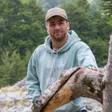 Gëzim Shuli Executive Director of AlbNatyra
 Gëzim Shuli is an Albanian professional working in nature conservation, rural development, sustainable tourism and youth empowerment. He is the Executive Director of AlbNatyra, an organisation working primarily on biodiversity conservation and sustainable development in Albania, with particular focus on the Elbasan and Librazhd regions.
Gëzim coordinates projects, partnerships and field-based initiatives involving wildlife monitoring, conservation of habitats for endangered species, development of nature trails and sustainable tourism, environmental education, and the involvement of young people and local communities in nature conservation. In parallel, he works on capacity-building, innovation and green entrepreneurship, supporting young people and organisations in creating new opportunities for sustainable development.
Open source profileIrini Myftaraj is a journalism student and civic activist who has been actively involved in the protests and public mobilisations of 2026. She has become one of the public voices associated with the Flamingo Revolution, taking part in marches and speaking publicly about the movement’s organisation, peaceful character and objectives.
Her engagement brings together her interest in journalism and active civic participation, adding to the group of initiators the perspective of a younger generation seeking greater transparency, accountability and meaningful opportunities for citizens to participate in public decision-making.
Open source profile Joniada (Jona) Ngjelo IT professional
 Joniada Ngjelo is a lawyer and legal professional based in England, as well as one of the active voices opposing Law No. 21/2024. As one of the 12 referendum initiators, she brings both a legal background and the perspective of the Albanian diaspora to the initiative.
Her engagement has focused on protecting the public interest, strengthening the legal case surrounding the initiative and helping translate civic opposition to the law into a concrete constitutional process. Within the group of initiators, she has been one of the driving forces behind this work, combining legal expertise, civic activism and diaspora engagement in support of the referendum.
Open source profileLazjon Petri is a biologist with a Master’s degree in Environmental Biology, as well as an author, translator and professional with experience in nature conservation. According to his account contained in the project materials, he spent approximately three years working in Patok as a translator and assistant to sea-turtle researcher Michael White, helping tag and photograph turtles caught in traditional stavnik fishing traps. His contribution is also referenced by MEDASSET, which acknowledges him in documentation relating to research on sea-turtle population structure in the Drin Gulf, and by an annual CABI report that refers to him as a young scientist from Albania.
He has worked in Prespa National Park, undertaken postgraduate training at the University of Klagenfurt, and contributed as a local intermediary to documentation for the Pogradec Protected Landscape, where his name appears in the supplement to the management plan. Petri has also worked as a tour guide and later in research and development within the food industry.
In the cultural sphere, he has published essays with Peizazhe të Fjalës, including writing on nature, protest, history and culture. His profile brings together science, environmental education, tourism and civic reflection.
Open source profile Mateo Yskollari Student and activist
 Mateo Yskollari is an activist and Master’s student in Computer Engineering. He has participated in numerous civic protests and has been particularly engaged with issues affecting young people and education. He has taken part in student forums across the Balkans and has been an active voice in student causes over a number of years. Within the Flamingo Revolution, he participates as a student and civic activist opposed to Law No. 21/2024.
His decision to become one of the initiators of the referendum reflects a wider conviction that the younger generation has both a stake and a responsibility in shaping Albania’s future and advancing the country towards alignment with European Union standards.
Open source profile Migena Kukli Environmental engineer
 Migena Kukli is an environmental engineer with more than 18 years of professional experience in environmental protection and project management. She has led and provided consultancy on projects involving biodiversity protection, water resources, risk management and environmental awareness.
With a longstanding commitment to nature conservation and the public interest, Migena is also active within the Albanian diaspora community, contributing to civic initiatives and helping strengthen the voice and participation of Albanians living abroad.
Open source profile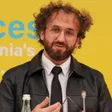 Oljam Dervishi Director of the RESU association
 Oljam Dervishi is an agro-environmental engineer, researcher and environmental activist. He holds two Master’s degrees: one in Agro-Environmental Engineering from the Agricultural University of Tirana and another in Territorial Management and Local Development from Paul Valéry University in France.
Following his studies and professional experience abroad, he returned to Albania, where he combines scientific research with field-based work. He is the author and co-author of research and has worked across territorial analysis, GIS, environmental policy, rural development and natural-resource management.
In 2022, together with four other young professionals who had returned to Albania, he co-founded RESU — Reinforce Sustainability, where he serves as Executive Director. Through RESU and the River of People programme, he works on river conservation, community empowerment and the involvement of young people in addressing environmental challenges. In 2025, he received the “Green Activist” award for his contribution to youth mobilisation and community awareness around the protection of rivers and nature.
Open source profile Rikaldo Çelaj Archaeologist
 Rikaldo Çelaj is an archaeologist with academic training in Archaeology and Cultural Heritage and a Professional Master’s degree in Tourist Guiding. His professional experience brings together archaeology, cultural heritage, interpretation of place and tourism, including professional work with Abkons.
In 2026, he participated as a research collaborator in archaeological excavations at the Circular Forum of Dyrrachium, as part of the research project Dyrrachium in Late Antiquity conducted by the Institute of Archaeology of the Albanian Academy of Sciences. His experience brings to the initiative a perspective that connects the protection of cultural heritage, territorial stewardship and sustainable development.
Open source profileLast updated